Visar inlägg med etikett WWF. Visa alla inlägg

torsdag 9 februari 2017

The possible end of trade with so called antique ivory

Elephants are heading towards extinction. Between 1930 and 1940, according to the world Wildlife Fund for Nature (WWF), there were between 3 and 5 million African elephants alive in the wild. Today, because of an explosion in illegal poaching, the number has declined to just 400,000. An elephant is poached every fifteen minutes, all year round. Unless we, the human race, put a stop to this, the largest mammal on earth will be gone in a couple of generations.

The Mabenzi Family, Gorongosa National Park. Photo: ElephantVoices
Most people active in the antiques trade knows exactly why this is happening. The illegal trade in elephant ivory is flourishing today. According to international rules, ivory objects made after 1947 are illegal to trade with. But these rules are being routinely flouted by dealers and auction houses around the world.

CITES was drafted as a result of a resolution adopted in 1963 at a meeting of members of IUCN (The World Conservation Union). On 1 July 1975 CITES entered in force. For many years CITES has been among the conservation agreements with the largest membership, with now 183 parties. Only "worked" ivory specimens acquired before 3 March 1947 can be considered antiques and therefore legally be traded.

Guanyin ivory figurine on the Danish Auction Market in 2013, with a -according to Antikmonologen- bogus provenance. Withdrawn straight away, after Antikmonologen published, discussed and dismissed the provenance. It was re-entered on the market in January 2014 and then sold for 30.000 DKr, circa £ 2.700. The provenance had by then been conveniently altered.

As an antique dealer with a great interest in Oriental works of art, I have taken special interest in ivory that has been bought and sold in Sweden as well as internationally. What has struck me over and over again is how auction houses seemingly arbitrarily date objects made of elephant ivory as "late 19th Century" or "early 20th Century" even though they could very well have been made during the latter part of the 20th Century. It has become an "Auction House Standard", probably to avoid the eyes of the authorities and others that might question a catalogue entry.


I have been able to prove large anomalies over and over again with catalogued ivory objects in Sweden, Denmark, Germany, England and Asia during five years of writing the blog-post Antikmonologen. The sales of ivory has drastically dropped in Sweden since Antikmonologen started to penetrate the subject, in 2013. I act as a consultant to many Swedish auction houses -that want to do right- and frequently receive questions regarding ivory items; both from the trade and from the public.

Over the past few years I assisted the WWF of Sweden in addressing the ivory crisis, and in 2016, I was asked by the researchers for the BBC series Saving Africa´s Elephants; Hugh and the Ivory War, to point out suspicious ivory items that were for sale on the open market in England. In doing so, the BBC were able to show that seven out of ten ivory objects that they bought were made after 1947, i. e. illegal to sell.


In October 2016 I visited the largest Antiques Fair in Europe, Mercanteinfiera, with over 1,000 exhibitors, in Parma, Italy. The problems with numerous modern objects made from elephant ivory were in abundance. It was absolutely devastating to see how easily accessible all the ivory was, and to what extent. Smaller objects such as snuff bottles and netsukes were sold by hundreds of dealers. Several dealers sold very large and/or expensive items marketed for tens of thousands of Euros each. All items that I asked about were labelled as either "antique", "19th century" or "early 20th century" ivory, in stark contrast to my opinion. Most of the expensive items were sold with more or less home-made-looking certificates. Certificates are much easier to fake than the actual object. The Mercanteinfiera Fair takes place two times per year.


Unfortunately, according to the way the rules and regulations are set up, it is far too easy to claim the so called Antique exception and sell virtually any object made of ivory, claiming that it is from before 1947. It has become common practice for auction houses, when questioned whether or not an ivory object is old enough to be sold, to claim the Antique exception. In other words, auction houses are acting as both judge and salesman. They have a vested interest in judging ivory objects to be old enough, otherwise they are not able to sell them.

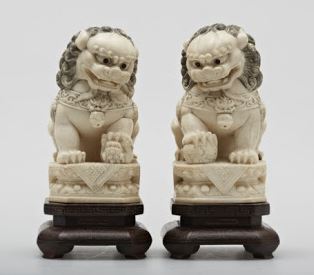
A pair of ivory Fo-dogs catalogued by one of the biggest Swedish Auction houses in August 2013 as: "Guardian lions, possibly China, 19th-20th Century, ivory. Virtually no wear. Condition over all probably good". At this particular instance, the police charged in to the actual physical hammer auction and confiscated a large number ov ivory items. The Auction house were then charged twice, in the Swedish judiciary system and freed both times. The so called Antique exception saved them. Their own expert, married to the owner of the Auction house in question, promised two courts that all ivory included in the auction pre-dated 1947.

More or less local solutions for ivory sales are applied, with the US as the market with the strictest rules and the Chinese recently having said that they will prohibit ivory trade alltogether by the end of 2017. How and to which effect remains to be seen.

Atomic blast. Photo: Cryhavok.org

Is there a solution to the ivory dating problem? The simple answer is yes, without any form of doubt. There are around 125 laboratories around the world that perform AMS (Accelerator Mass Spectometry) radio carbon dating. And since the crucial year is 1947, it is very easy for any of those laboratories to determine the age of the object in question. The reason for this is that the first ever nuclear detonation took place in New Mexico, US, on the 16th of July 1945. There were 2053 nuclear explosions between 1945 and 1998. As explained to me by Professor Göran Possnert at the Tandem Laboratory in Uppsala, Sweden, this makes it relatively simple to date organic material from 1945 onwards with great precision.

Fancy ivory/silver lidded cup for sale at the Mercanteinfiera Antiques Fair in Parma, October 2016. The salesman said it was made during the early part of the 18th Century. The laminated certificate said "Fin de XIXeme Siecle (end of 19th C)" (the vendors were French). When I questioned the 18th Century dating, the salesman changed his opinion to what the certificate said. Antikmonologen dates the entire object to around the year 2010. The asking price was 15.000 Euros.
So, is this very simple way of determining the age of ivory objects being used to any extent by the Auction houses (who totally dominate the high end market of the ivory business)? Alas, the answer is "No". The rather spurious pretexts from auctioneers has been that collectors do not want drill holes in the objects they might purchase or that the AMS tests are too expensive to perform. Or that it would not be a viable alternative to date all ivory objects and that the experts in the trade can date the objects themselves, from appearance only.

Too big.
The drill hole argument is not good enough, since the sample needed is minute according to Professor Possnert. -It is very easily disguised. The argument that the experts can date the objects themselves is correct to a certain extent, but it should be noted that ivory is an organic material that is very easily patinated and the Chinese are sublime patinators (it goes without saying that objects are carved in antique styles). Also, the risk of a cataloguer dating an object as from before 1947, just to be able to sell it, is as earlier pointed out, obvious.

It all boils down to the actual cost of an AMS test. In Sweden it would be around 3000 Swedish kronor plus VAT. The cost in England would be around £500 plus VAT. However, according to Professor Possnert in the AMS laboratory in Uppsala, the testing for age of ivory objects is virtually never asked for, neither by private persons nor by organizations.

Does the above mentioned imply that all ivory items suspected of being post 1947 should be destroyed? Of course not. But my suggestion is that all items consisting of, let us say, more than 20% ivory should be tested, when they come up for sale. Always, with no exception. This ought to put a stop to most of the selling of elephant ivory. As soon as you make exceptions to that rule, the need for some type of jury comes up and that would complicate matters unnecessarily. How very obvious pieces are to be dealt with, for instance objects with known, specific provenances, is for the international community, EU/CITES to decide. Should they be excluded from the "absolute" demand for AMS-test? I personally think so, but the survival of elephants is at risk, so maybe no exceptions to the AMS-demand should be accepted. It certainly is complicated, but needs to be addressed. Now!

Potential buyers at the Mercanteinfiera Antiques Fair in Parma, October 2016, admiring one -of a pair- of Ivory vases. They were dated as "late 19th Century". Antikmonologen begs to differ and consider them to be from circa 2010. Asking price 20.000 Euros.

The obvious solution to the ivory crisis is to implement an obligatory AMS test for all ivory items that comes up for sale. Strong forces are at hand, and they bring modern, antique-patinated ivory carved in an antique manner on to the Antiques market. Once an ivory object is sold as "antique" or labelled as pre- 1947, it is generally accepted as "kosher" or okey for all times, by the trade. A form of laundering.

We have come so far that £300-500 should not be allowed as the cause of obliterating the elephants as a species, the largest mammal still walking on earth. Nota bene; still.


Hugh Fearnley-Whittingstall in front of piled up ivory tusks, working with the BBC1 series Saving Africa´s Elephants. Photo:BBC

----------------------------------------------------------------------------------------------

Background on the author of this article, Nicklas Cederqvist:
Art Historian, Antiques and Art dealer, Writer of the biggest blog post in Sweden on the Antiques trade; Antikmonologen.blogpost.se. Educated at the University of Stockholm and Sotheby´s Institute, London.

Links:
http://antikmonologen.blogspot.se/2013/08/uppsala-onlinekvalitetsauktion-avsager.html
http://antikmonologen.blogspot.se/2013/09/elefantdod-inte-elefantol-och-skandaler.html
http://antikmonologen.blogspot.se/2016/10/europas-storsta-antikmassa.html
https://bruun-rasmussen.dk/m/lots/DAF6CE16B4E9?src=http%3A%2F%2Fwww.bruun-rasmussen.dk%2Fsearch.do%3Fpg%3D1%26q%3Delfenben%26iid%3D300592136%26mode%3Ddetail


onsdag 28 maj 2014

Crying Buddha sold at Woolley & Wallis in Salisbury

Every 15 minutes an elephant is poached, 365 days per year. If this is allowed to continue, the greatest landliving mammal on mother earth will be extinct within a generation or two.
Illegally poached elephant. Photo: Baraza.wildlifedirect.org
For the past 28 months I have been writing blog posts (in Swedish) on subjects that are related to the Antiques and Arts trade. Frequently I discuss subjects that other sources for some reason or another ignore. One subject that lies close to my heart is elephant ivory. I have proven that several auction houses have been trying to sell ivory that has been worked on long after 1947, -the critical year in regards to the CITES Convention (the Convention on International Trade in Endangered Species of Wild Fauna and Flora). Ivory objects that are proven to stem from before 1947 are legal to buy or sell, and illegal if they are from after 1947. Proper paperwork is necessary to prove a correct provenance.

As an antique dealer specializing in Oriental Antiques, I frequently browse the internet and the other day I took interest in a Woolley & Wallis (W&W) Auction Catalogue in Salisbury, England. More specifically their latest Oriental sale, that took place on the 21-22 of May, 2014.

The number of items made of or including ivory amounted to 77, a staggering number considering that auction houses ought to be quite restrictive in admitting pieces made from elephant ivory. Be that as it may. That is a difficult discussion to pursue.

Since I first discussed the problem of auction houses trying to sell (potentially) new ivory, the attempts to sell ivory have dropped drastically in Sweden (see the blog post Six-finger-Jane-returns; Now even older and WITH a provenance! (please use the google translate-button for translation).

Ms and Mr "Six-finger-Jane", circa 15,5 cm.

Detail: Happy -modern-facial features...
"Jane´s" six fingers clasping the ewer of brew.
I nick-named an ivory figure "Six-finger-Jane" that was first(?) put up for sale in the autumn of 2013 in south Sweden (Helsingborgs Auktionsverk (HAV)) and did not meet its reserve. Before the sale, I pointed out that the pair of figurines were of exceedingly banal quality and produced in a way that implied a very late date. HAV offered it for sale in 2013 and had no (printed) provenance to offer and dated the two figurines as "early 20th Century" at 8000 SKr, roughly £719. As earlier stated and to no-one´s surprise they failed to sell. Atypical smiling faces, a general stiffness to the carving and an extra finger to the left hand of the woman were facts among others that drew me to the conclusion that these figurines were of a later year than 1947. Also, a curiously gigantic ring finger was noted. This pair of figurines is now offered by another Swedish auctionhouse, Skånes Auktionsverk. This time with a rather specific provenance and dated slightly earlier and with a slightly higher suggested price span.

Now, look at lot number 478, in Woolley & Wallis Asian Art II- 22 May 2014:
Lot nr 478, "A large Chinese ivory carving of Budai He Shang c.1900", 23,2 cm.
This smiling, semi-clad, rather chubby chap, so called Budai He Shang by W&W´s experts, (often also referred to as a laughing Buddha/Budai) is rather interesting. The estimate was £300-500 (3340-5568 SKr) but it sold for quite a bit more, namely £2.500 (27.843 SKr). Please compare Ms Six-finger with our laughing friend. I need not delve very deep into the general stiffness of all three of these figurines. They are all so poorly executed, that it is appalingly obvious that they could not possibly have been made in around the year 1900. Oh, maybe one more thing. While you are at it, throw a glance at Mr Happy Buddha´s right foot, please:
Detail of lot nr 478, at Woolley & Wallis.
Here we have an item that has been catalogued by professional auctionhouse employees as circa 114 years old. An item that was carved from purportedly -at least- a 114 year old elephant´s tusk. The Chinese artisan who carved this tusk ought to have been a master with the carving tools, regarding how highly ivory was esteemed at the time.

I can hear the boss of the Ivory carving workshop shout: WHERE did you place the toe nails, you moron?! And on another day maybe the same boss was heard shouting to the very same employee: HOW many fingers did you do on that hand, you IDIOT!? I hereby suggest that these figurines were both made by the same copyist carver, please note the choice of wording, I did not write artist carver.

You may still think that it must be the real and genuine deal, since it "sold for so much money". Here´s the irony of it all; I am guessing that the buyers of pieces like this are men with very thick wallets, but possibly not so thick on the knowledge side of it all.

The Buddha-with-the-crazy-foot is probably bound for mainland China. The subject of Chinese buyers of Chinese fake items has been extensively discussed by Antikmonologen.
The Guardian, the 22nd of May, 2014.
All the above might sound funny at first glance, but I assure you I am not laughing. There is so much money in ivory that many strong forces keeps the illegal trade going. Organizations such as Elephant Voices and World Wildlife Foundation (WWF) keep highlighting the precarious situation of the elephants. WWF have pointed out that there are links between organized crime and the ivory trade. The Swedish branch of WWF ran a campaign in 2013 and petitioned for the Swedish auction houses to bring a complete halt to the trade in ivory(-related artefacts). I am pretty certain that the auction houses of the world would protest strongly against that. Ivory was included in a plethora of items up until the plastic era, so it certainly might be difficult to implement.

On the other hand, if auction houses and front-line experts keep admitting and selling obviously modern ivory artefacts, our children will be without the majestic creatures that I so much love. One auction house in Sweden, Uppsala Auktionskammare, will be brought to court for violating the CITES Convention (Uppsala Auctions -PROBABLY- gives up responsability for Asian Antiques). How is it possible for a big auction house to sell pieces like the ones discussed in this blog, that could be spotted by anyone mildly talented and interested in works of art, as banal, recent work? Finding six fingers on one hand or toe nails on the underside of a foot from the late Qing period is like spotting a Volkswagen Beetle in a Rubens oil painting.

The marketplace Ebay announced in 2008 that ivory sales were banned with them. That is not at all the case. Click away for a minute or two on the web. Yet another sad story.
"2 19th Century faux ivory, gentlemans cloth brushes.armorial, monogrammed"(sic.) For sale at Ebay on the 28th of May. Nothing faux about that.
The fact that Chinese ceramics are extensively faked and offered all over the world as old, is a very sad story indeed. The problem is hardly new and we see auction houses, dealers and Fair traders who more or less knowingly keep up the work of selling hoax objects to the market. A market that on the whole is unaware of what is going on. But, the experts must know. And do they mention or question that? If you ask me, the answer is very often NO. As John Cleese put it in the comedy Fawlty Towers; Do NOT mention the war. I believe the market is rather cynical; Oh, some rich person from China just bought a pottery bowl for lots of money. Was it new, catalogued as old? -Heck Yeah! But he can probably afford that "loss" or negative investment.

A small auction room called Kolonn in Stockholm, Sweden, tried to sell the following vase today (28th of May):
Lot 154906, "Vase, porcelain, China, probably 19th Century, estimate £135".
Detail of the above
Anyone with a rudimentary interest in Chinese blue and white porcelain, knows that a vase like the one illustrated did not exist during the 19th Century. It is a very poorly executed fake, some might call it copy, of a Yuan (1279-1368) vase. It is catalogued by supposedly professional people, in a professional environment that purports to take full responsibility for correct catalogue entries. I call it Antique-phishing. I see hundreds of examples of totally mis-catalogued mainly Chinese ceramics, every day, 52 weeks per year. Does anyone "important" speak up or protest? Not as far as I know. Do not mention the war. Mind your OWN business. The vase failed to sell.

There is one fundamental difference between all the Chinese fake ceramics and the overwhelmingly questionable Woolley & Wallis laughing Buddha (I prefer to refer to him as a crying Buddha). The difference being that for every elephant ivory piece that is sold, there will be another client looking for new items. Be that antique or new. In other words, the elephants will keep on being slaughtered for their tusks.

How often is an elephant poached?
What it always comes down to
Is it worth it, John Axford, Deputy Chairman of Woolley & Wallis, one of the familiar faces of the British Antiques Road Show and other auctioneers of the world? How big would the "loss" in income be for the auction houses of the world in total, if you started to really impose the rules of CITES?
In it for the money? (John Axford, photo: Woolley & Wallis)
...Grab that cash with both hands and make a stash
New car, caviar, four star daydream,
Think I'll buy me a football team
Money get back
I'm all right Jack keep your hands off my stack.
Money it's a hit
Don't give me that do goody good bullshit...
Pink Floyd, -parts of lyrics to the song titled "Money"


Footnotes:
I dedicate these lines to the fantastic person and great expert Gordon Lang, whom is no longer with us. Rest in peace Gordon, may you be surrounded by great pots, wherever you are.

The Qing period lasted between 1644-1912, the first Volkswagen Beetle was produced in 1938 and
the magnificent artist Peter Paul Rubens lived between 1577-1640.


Sources:
http://www.woolleyandwallis.co.uk/Search?q=ivory

http://www.woolleyandwallis.co.uk/Lot/?sale=AA210514-2&lot=478&id=269465

http://www.cites.org/eng/disc/what.php

http://www.theguardian.com/world/2014/may/22/chinese-museum-closed-down-fake-exhibits-lucheng

http://en.wikipedia.org/wiki/Volkswagen_Beetle

https://auctionet.com/sv/154906-vas-porslin-kina-trol-1800-tal

http://www.azlyrics.com/lyrics/pinkfloyd/money.html

https://www.youtube.com/watch?v=ZwU8QeW4ofU

http://www.standard.co.uk/news/uk/ebay-traders-are-flouting-ban-on-ivory-by-calling-it-faux-9119071.html


fredag 22 november 2013

Svensk elefanthöst

Under samma vecka i november 2013 kom ett antal nyheter som alla gäller utrotningshotade djur.
(För bäst förståelse av följande text bör läsaren först ha läst tidigare Antikmonologer i ämnet. För Citesregler, se "fotnoter" nedan!).

*Den 12:e november lanserade World Wildlife Foundation (WWF) kampanjen Stoppa elfenbenshandeln i Sverige- Säg nej till att svenska auktionshus handlar med elfenben. Kampanjen lanserades stort i sociala medier (läs Facebook), i dagspress med påkostade annonser i storformat och även personliga brev till Auktionshusen.
*Dagen efter WWF:s kampanjstart, den 13 november, skriver auktionshuset Bukowskis på sin hemsida:
"Bukowskis tar frågan om rovjakt på elefanter och även andra utrotningshotade djur på stort allvar och som auktionshus tar vi ett extra stort ansvar. Därför har vi sedan många år tillbaka ett nära samarbete med Jordbruksverket, polisens avdelning för artskyddsbrott och godsroteln.
Vår policy är att uteslutande sälja/förmedla föremål med ett kulturhistoriskt värde så att de kan tas om hand för framtida generationer. Gränsen för legala elfenben går vid 1947, men där har vi satt en egen gräns på Bukowskis. Föremålet ska, för att bli aktuellt för auktion, vara antikt, d.v.s. över 100 år gammalt samt snidat/bearbetat. Vid minsta tveksamhet tackar vi antingen nej till föremålet, alternativt låter det testas för ålder via kol-14-metoden".

*Den 14:e november krossades och förstördes för första gången i USA (i Denver) sex ton elfenben, som under lång tid har beslagtagits och förvarats av diverse myndigheter. President Obama lanserade i juli 2013 en specialstyrka som ska arbeta mot illegal elefantjakt, med speciellt anslagna pengar. Man har via USA:s diplomatkår också kontaktat regeringarna i Kina, Vietnam och Thailand i ämnet.

*Den 14:e november berättar svensk polis att man dagen innan, den 13:e november arresterat tre personer för artskyddsbrott i Stockholm, samt att ett noshörningshorn med ett förmodat marknadsvärde på fem miljoner kronor har tagits i beslag.
_____________________________________________________________

Nr 830, "Medicindocka, Kina, tidigt 1900-tal", utrop 2.000 kr. (Såld för 3.600 kr)
Nr 866, "Figuriner 2 st, Kina 1900-talets början", utrop 8.000 kr (Osålda)
Nr 1455, "Schackspel, spelpjäser i elfenben, 1900-talets första hälft", utrop 4.000 kr (Såldes för 4.800 kr)
Helsingborgs Auktionsverk (HAV) har till sin Kvalitetsauktion den 1 december 16 utrop som inkluderar elfenben. Av dessa anser jag nr 830, 866, 1411 (föreställer Nepalesisk "gudom", vilket ej är konstaterat av HAV- såldes inte) och 1455 som intressanta för åldersdiskussion (1455 sålde för 4.800 kr). Se tidigare Cites-relaterade diskussioner. Nr 830 är en så kallad medicindocka (Doctor´s lady), en form som är mycket vanligt förekommande på (antik-)marknaden; Proveniens: Dansk privatsamling (Såld för 3.600 kr). Anledningen till nakenheten säges vara att man använde dylika för att kvinnor med krämpor skulle kunna peka på figurinen och tala om för läkaren var exakt det onda satt, -för att slippa klä av sig. Proveniens för nr 866 anges icke. Heller ingen proveniens för schackspel nr 1455, dock tidsspecifikation som faller in i "olagliga Cites-år", nämligen 1947-50. Jag har sökt HAV för kommentarer, men inga sådana gives tyvärr förrän auktionen är framplockad den 23 november, enligt telefonbesked.


Nr 866, -Detalj av vänstra figurinen
Eftersom händer alltid är svåra att avbilda i konsten, på duk och i skulptur, tittar jag lite extra på kvinnans hand som håller den lockförsedda kannan. Hålet precis ovanför handen indikerar handtagets hål. Bakom handtaget anar man att tummen på kvinnans vänstra hand finns. Räkna då kvarvarande fingrar på kannans framsida. Ovanför handtagets avslutande, utstickande krusidull anas fem fingrar. Därtill kommer tummen bakom handtaget. Att "ringfingret" är störst av de fem är också fascinerande. Mest intressant är nog ändå att kannbärerskan alltså är begåvad med sex fingrar. Elfenbensföremål av låg, banal karaktär blev inte vanliga på "antikmarknaden" förrän massturismen blev ett faktum. (Nr 866, paret figuriner, förblev osålda)
Nr 3019, "Two Carved Ivory Immortals, 19th Century", 19 cm, utrop 6.000-8.000 kr (Osålda)
Stockholms Auktionsverk (SAV) har sju elfenbensutrop och man måste söka både på "elfenben" och "ivory" för att hitta dem, eftersom den orientaliska avdelningen endast är katalogiserad på engelska, vilket säger en del om var kunderna förväntas komma ifrån. Intressanta att diskutera ur Cites-synvinkel är nr 3019, "two carved ivory immortals". Dessa kommer enligt angiven proveniens från en sydosteuropeisk konstnär som undervisade i Kina mellan 1960-62. Teoretiskt kan de då ha varit nyskurna, om de införskaffades då. (De förblev osålda)
3071, A Group of Three Snuff Bottles, utrop 3.000-5.000 kr (Såldes för 2.400 kr)
För utrop 3071 anges ingen proveniens. Den 7 cm höga elfenbensflaskan skulle av undertecknad ha katalogiserats som 1900/2000-tal. (De tre snusflaskorna såldes för 2400 kr). I samtal med Elisabet Fellbom, ansvarig Intendent för Orientaliskt på SAV, får jag reda på att båda utropen på Auktionsverket har funnits i familjeägo sedan mycket länge. Elisabet säger att man verkligen vill undvika modernt elfenben och därför vill att föremål som man säljer ska vara från minst 1800-talet.

Uppsala Auktionskammare har inga orientaliska elfenbensutrop i sin Höstkvalité. (Se bloggen Uppsala onlinekvalitetsauktion avsäger sig -TROLIGEN- ansvar för asiatiskt konsthantverk).

Bukowskis (BUK) har valt att inkludera 11 elfenbensutrop i sin höstkvalité. Jag pratade den 20 november telefonledes med Cecilia Nordström (Intendent för Orientaliskt Konsthantverk) om saken och hon bad mig att lämna över katalogiseringen till Bukowskis. Cecilia underströk att man alltid har vattentät proveniens för alla de föremål man säljer hos auktionshuset men att däremot ägarna inte särskilt ofta vill ståta med sina namn i katalogen. Detta är jag fullt införstådd med, men undrar ändå hur man motiverar att ta med ett antal som ur rent stilistisk-konsthistorisk synvinkel ser väldigt sena ut. Cecilia berättar om Bukowskis intensiva och mycket fina samarbete med Jordbruksverket, Polisen och WWF samt påpekar att man har en egen hus-regel hos Bukowskis som säger att varje elfenbensföremål måste vara antikt, dvs minst 100 år, för att överhuvudtaget tas in till försäljning (se ovan). Alltså att man hos Bukowskis går ett steg längre än det lagen kräver; att föremålet måste vara från före 1947.

Nr 1365, "S.k. Doctors Lady, Qing dynastin, omkring 1900", utrop 10.000-15.000 kr (Förblev osåld)
Jag bad min sambo, -en kvinna i sina bästa år, att vänligen kommentera relationen mellan kroppsstorlek och byst på ovanstående av Bukowskis utropade så kallade Doctor´s lady. Sambon bedömde bysten som "gigantisk och möjligen en D-kupa, ovanlig för en asiatisk kvinna". Hon kommenterade spontant även "de underliga proportionerna" i figurinen. För ordningens skull bör tas ad notam att sambon ej är konsthistoriker, utan här endast konsulterades i egenskap av just kvinna.
Pamela Anderson (Wikipedia photo)
Ett känt faktum är bland konstkännare att konstnärer/ förfalskare oftast avbildar sin egen samtids utseende- och kroppsideal, även när de försöker kopiera/förfalska äldre tiders konstföremål. (Jag har i tidigare blogg pekat på detta, med kinesiskt glasmåleri som exempel; Ett på västkusten situerat större auktionshus gjorde under många månader 2013 fruktlösa försök att sälja av mig så kallade "kinesiska Playboy-damer", försedda med mycket stora behag i poser okända i kinesisk konsthistoria, till dags dato. Först katalogiserade som "1900-talets början", men efter min blogg ändrade till "1900-tal". Se bloggen Vidarebefodrat brev till Dalarnas Auktionsbyrå och Sveriges Konst- och Antikhandlareförening).
Bystig Netsuke, 9,7 cm hög
Chasing dragons, skuren elfenbens-bete
Poängen med resonemanget kring Doctor´s ladyn är att den dels är ekivok/erotisk vilket gör den extra attraktiv bland samlare (läs män) och dels att dess kroppsformer indikerar att den är skuren under Pamela Andersons samtid snarare än under Jung Changs mormor Yu-fangs samtid. Nedan noteras mer typisk barm för 1800-talets slut, i välkända skulpturen Snöklockan av Per Hasselberg, på Mariatorget i Stockholm.
Snöklockan, utförd år 1881, uppförd år 1900.
Fredagen den 16 november talade jag med Professor Göran Possnert på Tandemacceleratorlaboratoriet /Kol 14-laboratoriet i Uppsala. Han hade vänligheten att tala om för mig hur lätt det är att datera just elfenben och andra organiska föremål med hjälp av kol-14-metoden. Den bygger på att man i organiskt material bland annat kan detektera kärnvapensprängningar som skett i jordens atmosfär väldigt precist. Med hjälp av dessa kan man alltså datera ett elfenbensföremål mycket precist till före eller efter 1947. Mellan 1945 och 1998 har 2053 kärnvapenexplosioner noterats i världen. Professor Possnert påpekade dock att han mycket sällan utfört dateringar av elfenbensföremål för något auktionshus räkning. Det som behövs är minimum 50 milligram benmjöl, (beroende på bentäthet) för att korrekt datera objektet. Det minutiöst lilla borrhål som då uppstår kan mycket enkelt "retuscheras bort", om inlämnaren vill, berättar Professorn.
Kartfilm över världens samtliga (2053) kärnvapendetonationer, se länk ovan.
Det finns en hake och den består i en kostnad om 3000 kr + moms, (ingen moms för institutioner). Den haken vill sannolikt inte säljaren stå för och troligen inte köparen heller, -än mindre auktionshuset. Eftersom man där är säker på att objektet är "antikt", eller åtminstone från före 1947, då man valt att inkludera det i en försäljning. Vem som har rätt att kräva ett dylikt test för att bevisa ett föremåls laglighet kontra olaglighet är ett spörsmål av juridisk-etisk karaktär. Dock i sammanhanget ett enormt viktigt spörsmål.

Extra intressant är då vad Bukowskis valde att formulera som kommentar till WWF:s kampanj: "Vid minsta tveksamhet tackar vi antingen nej till föremålet, alternativt låter det testas för ålder via kol-14-metoden." Jag är intresserad av kol-14-dateringar av objekten 1363 till och med 1368. Hur löses det enklast, Bukowskis? (1363 med utrop 8-10.000 såldes för 5.000 kr, 1364 med utrop 10-12.000 sålde för 8.000 kr, 1365 osåld, 1366 med utrop 4-6.000 såld för 4.000 kr, 1367 med utrop 8-10.000 kr såld för 7.000 kr och 1368 med utrop 12-15.000 kr såld för 19.000 kr).
Tillbakadragen från försäljning av någon.
Under pågående visning har Bukowskis (-eller ägaren till objektet) valt att dra tillbaka nr 1362, Vinofferbägare i noshörningshorn, "Qing Dynastin, 1700-tal" från försäljning. Den 27 november, under pågående visning, publicerade World Wildlife Foundation (WWF) följande kampanj i media: 

"Noshörningshorn ligger just nu ute till salu på auktion i Sverige. Ofta är det vinofferbägare av noshörningshorn som säljs, som anses bära på en magisk och potenshöjande kraft. Vi tycker att svenska auktionshus ska ta ställning och sluta handla med noshörningshorn, så länge tjuvjakten pågår. Den illegala jakten ökar i ett rasande tempo. Fortsätter den illegala jakten i det här tempot riskerar noshörningen, som har vandrat på vår jord i 60 miljoner år att försvinna. Ett av Danmarks ledande auktionshus Bruun Rasmussen slutade sälja noshörningshorn efter stark kritik från WWF förra året. Vi vill uppnå samma sak i Sverige och behöver er hjälp!"

 
Om WWF:s kampanj har något med tillbakadragandet av Bukowskis senaste noshörningsföremål är för Antikmonologen okänt. (Katalogiseringen av ifrågavarande vinofferbägare var något kryptiskt utformad, då det stod att den var "såld av Bukowskis på 90-talet". När samma auktionshus säljer om ett föremål, brukar oftast exakt auktionsnummer och datum anges, särskilt då det är många år mellan respektive försäljning).

Madonna med jesusbarnet, skuren i elfenben c. år 1250-1260.
Elfenbensmadonnan från cirka år 1250 är ett tecken på att elfenben har varit uppskattat som medium sedan länge. Den säljs av Sotheby´s i London den 4 december, med ett utrop på £800.000- 1.200.000, runt 10 miljoner kronor. Med den viktiga skillnaden att elefanten som bidrog med material till "10-miljonersmadonnan" för att dödas sannolikt jagades springandes med skrik och spjut ner för ett stup eller i en grop. Idag används helautomatiska skjutvapen, snabba motorfordon och till och med cyanid för förgiftning av hela vattenhål -år 2013 inte år 1249- innan Stockholms grundande.

Tycker läsarna av Antikmonologen att auktionsscenen för elfenben verkar rörig, komplex och oerhört godtycklig?  Vilket sammanträffande! Det gör jag också. Vad är då syftet med denna blogg? Jo, att belysa just komplexiteten och godtyckligheten i auktionshusens hantering av elfenbensföremål. Självklart handlar också antikhandlare med elfenben, men inte tillnärmelsevis i samma utsträckning som auktionshusen. Glöm heller inte det jag tidigare anfört; så fort ett föremål sålts på auktion så får det en form av "godkänt-stämpel" som varandes äkta antikvitet och har på så vis kommit in på den legala marknaden, vare sig elfenbenet är från före eller efter 1947.

Absolut centralt i elfenbensproblematiken är, som i tidigare bloggar extensivt diskuterats, att kineserna är skickligast i världen på att ålderspatinera de flesta material, inte minst elfenben. WWF använder i sin kampanj möjligen en något olycklig frasering, när man skriver "förfalskat elfenben". Ingenting är falskt, förrän ägaren/förmedlaren (auktionshus exempelvis) påstår något oriktigt om ålder/ursprung/signatur etc på ett föremål. En kopia av en känd konstnärs måleri är inte falsk förrän den signeras med falsk signatur eller falskeligen påstås vara ett genuint verk av en känd konstnär. Det samma gäller för elfenbensföremål. Elfenben kan vara falskt om det i stället är gjort av plast, eller om det på något vis är felattribuerat. Elfenben införskaffat efter 1947 är illegalt, men det är inte det samma som falskt.
Levande elefanter eller döda föremål? Valet är mitt, ditt och auktionshusens! Foto från WWF/Facebook.
Är då WWF:s önskan om att auktionshusen helt ska upphöra med elfenbenshandel plausibel/ möjlig att genomföra? 21.435 människor har gillat förslaget på Facebook (kl 11.08 den 22 nov) under en dryg veckas tid. Personligen anser jag att det är rätt väg att gå, eftersom jag vill att kommande generationer också ska få uppleva vilda elefanter, jordens största landlevande däggdjur. Vi ser varje dag bevis på människans närmast gränslösa dumheter, varav tjuvjakt på elefanter är ett exempel. Det dödas en elefant var 15:e minut, uppemot 30.000 per år. Alltså har en, möjligen två elefanter dött under tiden du läst dessa jobbiga och insinuanta rader.

Auktionshusen sparkar såklart bakut åt WWF:s nollvision. Möjligen skulle undantag kunna göras för föremål som uppenbarligen/bevisligen är antika, alltså mer än 100 år. Elfenben har funnits och finns i massor av föremål; i möbler i form av små nyckelbrickor eller hela möbeln, biljardbollar, pianotangenter, ätpinnar, bestickskaft, ramar, ja listan är närmast oändlig. Men exakt HUR och VAR ska linjen dras mellan tillåtet och otillåtet?

Som det nu ser ut så är schablonkatalogiseringar och påhittade provenienser vardagsmat, på slott och i koja, hos landsbygdsauktioner såväl som stora auktionshus. Man gömmer sig bakom katalogiseringar som "ben", "1800-tal", "tidigt 1900-tal", "sen Qing-dynasti". Det är legio för att slippa granskas. Om det är auktionshuset eller inlämnaren som hittar på är egentligen mindre viktigt. Jag har sagt det förut: Auktionshusen vet att inlämnare hittar på, för att få till en bättre försäljning.

Dessutom, vem granskar? Vems uppgift är det att se till att auktionsbranschen utför ett korrekt arbete? Hur många tusenlappar per år drar ett auktionshus in på sålda elfenbensföremål? Är det inte försumbart i sammanhanget? Jag betvivlar att all PR är bra PR, som någon lär ha uttryckt det. Jag har extensivt diskuterat problem gällande av inlämnaren totalt ihopljugna provenienser med företrädare för många större auktionshus, brott som kan vara åtalbara. Jag har tidigare påvisat ihopljugna provenienser för exklusiva elfenbensföremål, se bloggen: Elefantdöd -inte elefantöl- på Lauritz och Bruun Rasmussen.

Här gäller det faktiskt oerhört mycket mer än när någon excentrisk rik kines köper en nytillverkad porslinsskål, i tron att skålen är 700 år gammal. Här gäller det en arts överlevnad. Eller motsatsen. Vare sig du tror på en gud eller på Darwins läror, så har a l l a dina förfäder haft möjlighet att se levande elefanter. Om en generation eller två kan den möjligheten vara borta. För alltid.
*****************************

Fotnoter:
Skjut inte elefanterna och heller inte budbäraren. Så länge det finns en efterfrågan på elfenben kommer tjuvjakten att fortsätta.

Jordbruksverket skriver:
"Elfenben bearbetat före den 3 mars 1947
Om du har elfenbensföremål (ej råelfenben) som är bearbetat före den 3 mars 1947 och om du på ett trovärdigt sätt också kan styrka detta, får du sälja det inom EU utan CITES-intyg från Jordbruksverket. Detta innebär att du, oavsett i vilket kommersiellt syfte du ska använda elfenbenet, måste kunna styrka på ett trovärdigt sätt att föremålet är så gammalt att det verkligen är undantaget från kravet på intyg, det vill säga att det är bearbetat före den 3 mars 1947. Om länsstyrelsen eller polisen gör en kontroll i samband med att du till exempel annonserar ut eller säljer elfenben och du inte kan styrka föremålets ålder, kan du komma att åtalas för artskyddsbrott".


Jung Chang är författaren till den förträffliga boken Vilda svanar, som handlar om tre generationer kvinnor i Kina.

Netsuken ovan föreställande Pamela Anderson-släkting(?) var till salu för 179 US $ och enligt utsago nytillverkad av flodhästbete på en webbsida för ett Hong Kong-företag, där enorma mängder av skurna mammutobjekt också ligger till salu, exempelvis "Chasing dragons", vars dagspris är $ 3.900 US. Åtminstone påstår man att det är mammut- och inte elefant-elfenben.

Situationen med legalt mammutben komplicerar elfenbensmarknaden kraftigt. Likaså förekomsten av så kallat legalt elfenben från elefant, som har sålts vid enstaka tillfällen. Vid googling på "mamooth ivory" fås närmast oändligt antal träffar på internet och allt är till salu och visuellt ofta extremt likt elfenben från elefant.

Det är belagt att merparten av allt illegalt elfenben går till Kina och framför allt Hong Kong. Då är det inte helt långsökt att det är samma verkstäder som skär i illegalt elefantelfenben som de verkstäder som skär legalt mammutelfenben.

Jag har anledning att tro att åtminstone ett av alla ovanstående diskuterade föremål som är till salu auktionshösten 2013, är nytt och tillverkat av mammutbete. (Vilket är intressant, för om jag har rätt, så är det alltså inte ett artskyddsbrott utan en katalogisering med falsk förespegling om att vara antik).

Möjligen har Nordkorea utfört två kärnvapendetonationer, vilket skulle ge siffran 2055, och inte 2053 kärnvapendetonationer hittills i världshistorien.

Ända sedan Övre Paleolitiska eran (22.000-18.000 före kristus) har människan tillverkat smycken av elfenben, då var det från mammut.


Relaterad artikel i dagspress:
SvD: Auktionshusen riskerar sälja illegalt elfenben (5 dec 2013)


Källor:
http://www.wwf.se/vrt-arbete/illegal-handel/1543898-stoppa-elfenbenshandeln-i-sverige?utm_source=WWF.se&utm_content=WWF_Alias_Slutklubbat&utm_campaign=WWF%20INTERN

http://www.denverpost.com/environment/ci_24518193/u-s-government-crushing-ivory-save-elephants-and

http://www.aftonbladet.se/nyheter/article17842065.ab

http://www.tv4play.se/program/nyhetsmorgon?video_id=2487862

http://memolition.com/2013/10/16/time-lapse-map-of-every-nuclear-explosion-ever-on-earth

http://world.time.com/2013/11/18/hong-kong-is-sitting-on-30-tons-of-ivory-and-has-no-plans-to-destroy-it/

http://www.jordbruksverket.se/amnesomraden/djur/olikaslagsdjur/hotadeartercites/elfenben.4.567cd63c135afd26c018000297.html 

http://www.auction2000.se/auk/w.ObjectList?inC=HAV&inA=20130527_1704&inPageNo=1&inPageMode=R&inScrollTop=&inSiteLang=&inSelectedSort=&inSearchCrit=0&inCategoryId=&inSearchText=elfenben

http://auktionsverket.se/auction/fine-arts/2013-12-03/search/?q=ivory

http://en.wikipedia.org/wiki/Pamela_Anderson

https://www.bukowskis.com/auctions/577?q=elfenben

http://en.wikipedia.org/wiki/Wild_Swans 

http://sv.wikipedia.org/wiki/Sn%C3%B6klockan

http://tide-mammoth.com/eshop/en/carving-sculpture/3905-hh0306.html

http://tide-mammoth.com/eshop/en/carving-sculpture/3465-mammoth-ivory-handcrafted-chinese-zodiac-dragon-carving-37587.html

http://www.realorrepro.com/article/Ivory-genuine-fake--confusing

Tryckta källor:

The Dictionary of Art, Ed. Jane Turner, 1996, Part 16, page 797.

måndag 1 april 2013

Sågad solkungselefant

I lördags, den 30 mars, ägde en stöld rum i Paris, av det mindre subtila slaget. 

En man bröt sig in i Naturhistoriska Museet tidigt på påskafton och använde sig av en motorsåg(!) för att såga av en av betarna på skelettet av en elefant. Snabelvarelsen var inte vilken som helst, utan tillhörde en gång en av Frankrikes mest kända kungar, Louis XIV, även kallad Solkungen. Elefanten fick Louis XIV i gåva 1668 av den portugisiske kungen. 
Museianställd med lemlästad elefant
Motorsågstjuven, endast 20 år gammal, fångades av polisen nära museet med en 4 kg tung bete. Den var dock inte original, utan hade adderats till skelettet under 1800-talet. Polisen hade ingen kommentar till varför mannen stal beten, men under de senaste åren har stölder av elfenben och noshörningshorn utgjort ett stort problem i Europa och annorstädes, både på museum och i djurparker.

Sedan 1950-talets population av miljoner afrikanska elefanter som minskade till runt 600.000 i slutet av 80-talet, kriminaliserades handeln med (modernt) elfenben 1989. Tjuvjakt och illegal handel med betar fortsätter dock i allra högsta grad.

Idiotiskt potensmedel
Se även bloggen: Antikjakt ger noshörnings- och elefantdöd och Antiktrend 2012 låter kviddevitt.


Källa:
http://artdaily.com/index.asp?int_sec=2&int_new=61638#.UVnnD1dj8tR
http://www.wwf.se/vrt-arbete/arter/1125722-elefant

A security guard at the Natural History museum stands in front of the elephant skeleton whose tusk was chopped off by a thief, at the Natural History museum in Paris on March 30, 2013. A young man was arrested by the police on the night of 29-30 March after attempting to steal the tusks of an elephant having belonged to Louis XIV by using a chainsaw to chop them off, according to the Higher Education and Research Ministry. AFP PHOTO/ JOEL SAGET. PARIS (AFP).- A man broke into the Paris natural history museum early Saturday and used a chainsaw to hack off the tusk of an elephant that belonged to King Louis XIV of France, officials said. Police arrested the man in a nearby street as he was making his escape and recovered the three-kilogram (seven-pound) tusk, museum workers said. The elephant whose skeleton is preserved in the popular museum was given as a gift in 1668 by the king of Portugal to Louis XIV, who was also known as the Sun King. The animal's tusks are not the original ones but were added to the skeleton in the 19th century. Police made no immediate comment about why the man tried to steal the tusk but the incident comes amid a series of thefts in recent years of ivory from European museums and zoos. The international trade in elephant ivory, with rare exceptions, has been outlawed since 1989 after elephant populations in Africa dropped from millions in the mid-20th century to some 600,000 by the end of the 1980s. Yet poachers continue to slaughter elephants to lay their hands on their precious ivory and the illegal trade in the white gold continues to boom.

More Information: http://artdaily.com/index.asp?int_sec=2&int_new=61638#.UVnnD1dj8tR[/url]
Copyright © artdaily.org
A security guard at the Natural History museum stands in front of the elephant skeleton whose tusk was chopped off by a thief, at the Natural History museum in Paris on March 30, 2013. A young man was arrested by the police on the night of 29-30 March after attempting to steal the tusks of an elephant having belonged to Louis XIV by using a chainsaw to chop them off, according to the Higher Education and Research Ministry. AFP PHOTO/ JOEL SAGET. PARIS (AFP).- A man broke into the Paris natural history museum early Saturday and used a chainsaw to hack off the tusk of an elephant that belonged to King Louis XIV of France, officials said. Police arrested the man in a nearby street as he was making his escape and recovered the three-kilogram (seven-pound) tusk, museum workers said. The elephant whose skeleton is preserved in the popular museum was given as a gift in 1668 by the king of Portugal to Louis XIV, who was also known as the Sun King. The animal's tusks are not the original ones but were added to the skeleton in the 19th century. Police made no immediate comment about why the man tried to steal the tusk but the incident comes amid a series of thefts in recent years of ivory from European museums and zoos. The international trade in elephant ivory, with rare exceptions, has been outlawed since 1989 after elephant populations in Africa dropped from millions in the mid-20th century to some 600,000 by the end of the 1980s. Yet poachers continue to slaughter elephants to lay their hands on their precious ivory and the illegal trade in the white gold continues to boom.

More Information: http://artdaily.com/index.asp?int_sec=2&int_new=61638#.UVnnD1dj8tR[/url]
Copyright © artdaily.org